· Dana Whitfield
Weaving Loom for Beginners: What to Buy First
The single biggest mistake we see in first-time buyers isn't a wrong technique — it's the wrong size. A wider frame loom looks like more value on the page, but it also means more warp threads to keep even, more rows to beat consistently, and a longer first project before you get the payoff of a finished piece. This guide is built around getting you to that first finished piece quickly.
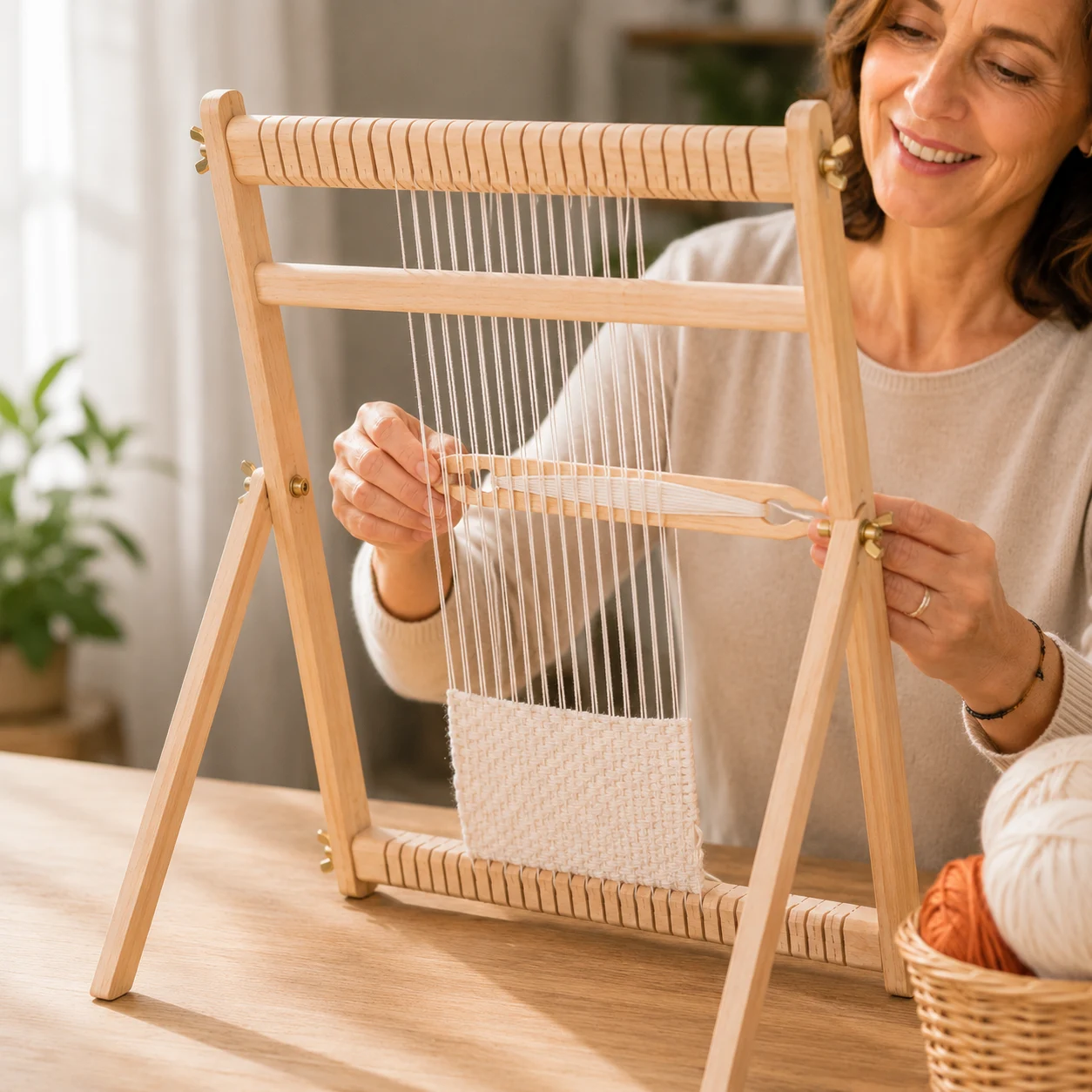
Which size should a beginner actually buy
| Size | Dimensions | Best for |
|---|---|---|
| Small | 39×27cm (15.35×10.62in) | First project, coasters, small samples, learning tension |
| Medium | 50×39cm (19.68×15.35in) | Most beginners' second and third projects, small wall hangings |
| Large | 60×47cm (23.62×18.50in) | Wider wall art and scarves, once you're past the learning curve |
If you're still unsure, our full weaving loom kit comparison breaks down exactly what ships in each size, including the 12-yarn set included with every one.
Five mistakes new weavers make
Warping too loose. A saggy warp makes every row harder to beat evenly. Aim for tension like a taut guitar string, not a rubber band.
Skipping the comb. Weaving several rows before beating feels faster, but it produces gaps you can't fix afterward. Beat every two to three rows, not just at the end — see our step-by-step guide for the full technique.
Starting too wide. A first project on the Large frame, edge to edge, takes far longer to warp and weave than most beginners expect. Start narrower than you think you want.
Yarn that's too thin. Thin, slippery yarn is harder to beat into a dense fabric and shows every tension mistake. A slightly thicker, grippier yarn is more forgiving for a first attempt.
Not securing the ends. Cutting the warp free without tying off pairs first is how finished pieces unravel from the edges within days.
Three first projects that actually get finished
| Project | Recommended size | Skill it builds |
|---|---|---|
| Woven coaster or mug rug | Small | Consistent tension and beating in a low-stakes size |
| Small wall hanging | Small or Medium | Color changes, simple shape, finishing fringe |
| Scarf sampler (narrow strip) | Medium | Longer warp management and rhythm over more rows |
If you'd rather learn on real tapestry technique from the start, our tapestry weaving basics guide covers color-blending and fringe finishing in more depth once you're through your first piece.
Our test: Dana ran the coaster and small wall-hanging projects above with the same first-timer she times on assembly (see our how-to guide). On the Small frame, a coaster-sized piece was finished in one sitting; the wall hanging on Medium took two. Nobody in that informal test finished a full-width Large piece on their first attempt, which is exactly why we don't recommend it as a starting size.
How to progress once you've finished your first piece
Move up in width, not in complexity, first. Repeat the same coaster or small-hanging project on your next size up before you introduce new techniques like multi-color blocking or shaping. Once tension and beating feel automatic on Small or Medium, the Large frame and its extra shuttle and notched rod stop feeling like a size jump and start feeling like more room to work with.
Americans who knit or crochet, according to the yarn industry's own trade association, a sign hand-craft hobbies are mainstream, not niche
— Craft Yarn Council, 2024
Knitting-forum posts analyzed in a study finding that a new needlecraft hobby helps build daily structure and a sense of identity
— University of Gothenburg, Journal of Occupational Science, 2024
Hand-crafters surveyed across 39 countries who linked more frequent practice with feeling calmer and happier
— Riley, Corkhill & Morris, British Journal of Occupational Therapy, 2013
Frequently asked
Is a weaving loom hard to learn for a total beginner?
No. The core motion (over-under with the shuttle, beating with the comb) is simple to learn in one sitting. Most of the early struggle is sizing and project choice, not the technique itself.
Should I buy the yarn bundle or my own yarn?
For a first order, the included 12-yarn bundle removes one decision (yarn weight and color matching) while you're still learning tension and beating. You can always buy your own yarn for later projects.
How long does a first project take?
A coaster on the Small frame typically finishes in one sitting. A small wall hanging on Medium is realistic across two. Give yourself more time for warping than for weaving itself.

Dana Whitfield · Textile Craft Curator, LoomCraft
Dana test-weaves every LoomCraft size on real tapestry projects, timing setup, checking warp tension, and how the notched bars hold up, and turns down more samples than she approves.
Reviewed and updated July 5, 2026. See how we test and our full about page.
Related reading: How to use a weaving loom · Best weaving loom, compared · Tapestry weaving basics · Reviews · All guides
Our most-recommended beginner size, with a full color palette included. Prefer to start smaller? See the Small kit.